Epoxy vs. Polyaspartic Garage Floor Coatings: What's the Difference?
Epoxy and polyaspartic are NOT the same thing. Here's an honest breakdown of the differences, pros and cons, and which one we actually recommend.
Epoxy vs. Polyaspartic Garage Floor Coatings: What's the Difference?
"I want epoxy on my garage floor" — we hear this every day. But here's the thing: what most people actually want is a polyaspartic coating. They just don't know it exists yet. Let's break down the real differences.
What Is Epoxy?
Epoxy is a two-part resin system (resin + hardener) that's been used on garage floors for decades. It cures through a chemical reaction and creates a hard, glossy surface.
Epoxy pros:
- Lower material cost
- Excellent adhesion to concrete
- Wide range of colors available
- Good chemical resistance
Epoxy cons:
- Slow cure time — 3-7 days before you can park on it
- UV sensitivity — Yellows and ambers in sunlight (especially near the garage door)
- Temperature sensitive — Can't be applied below 50°F, gets brittle in extreme cold
- Less flexible — More prone to cracking from thermal expansion/contraction
What Is Polyaspartic?
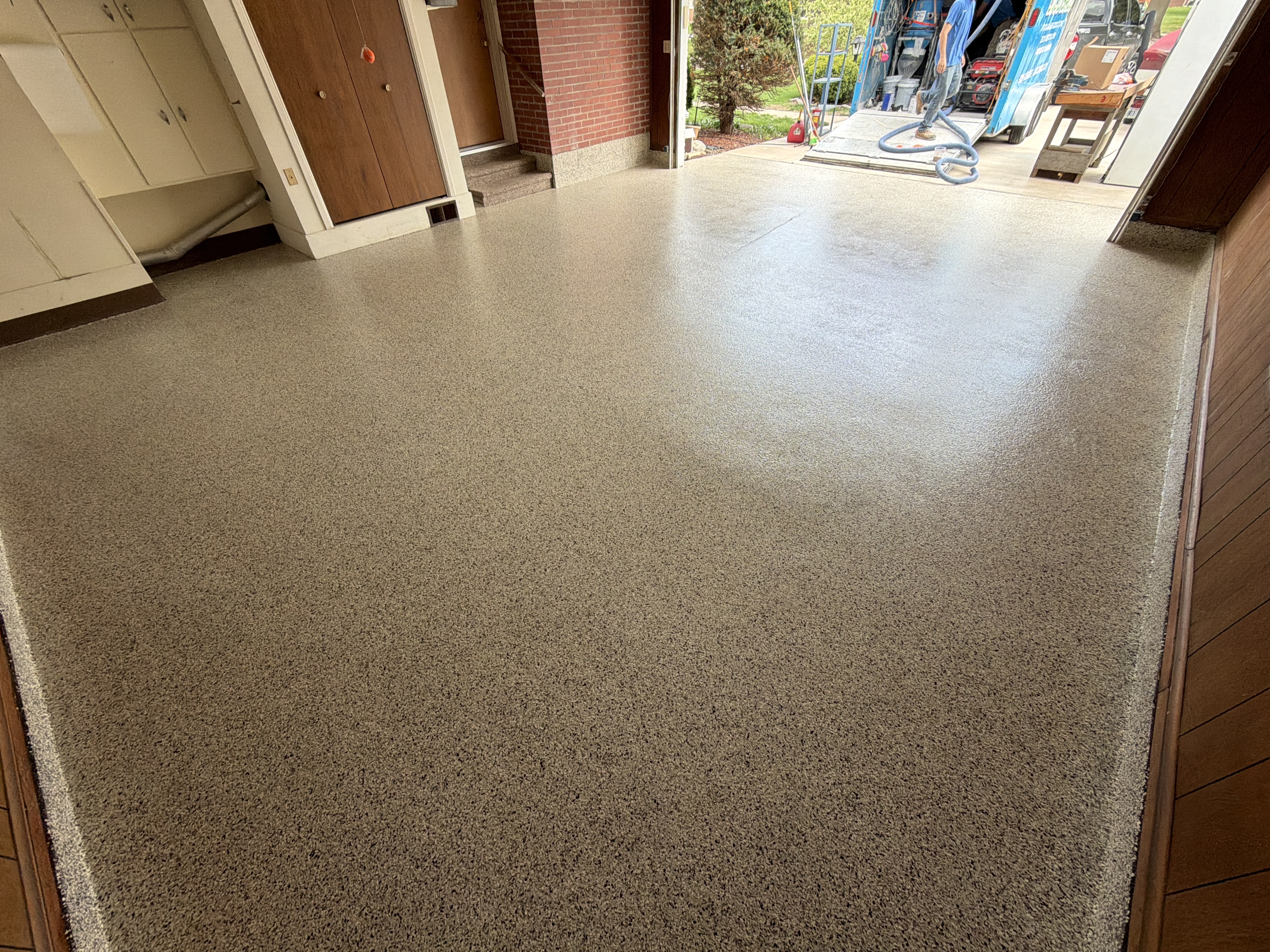
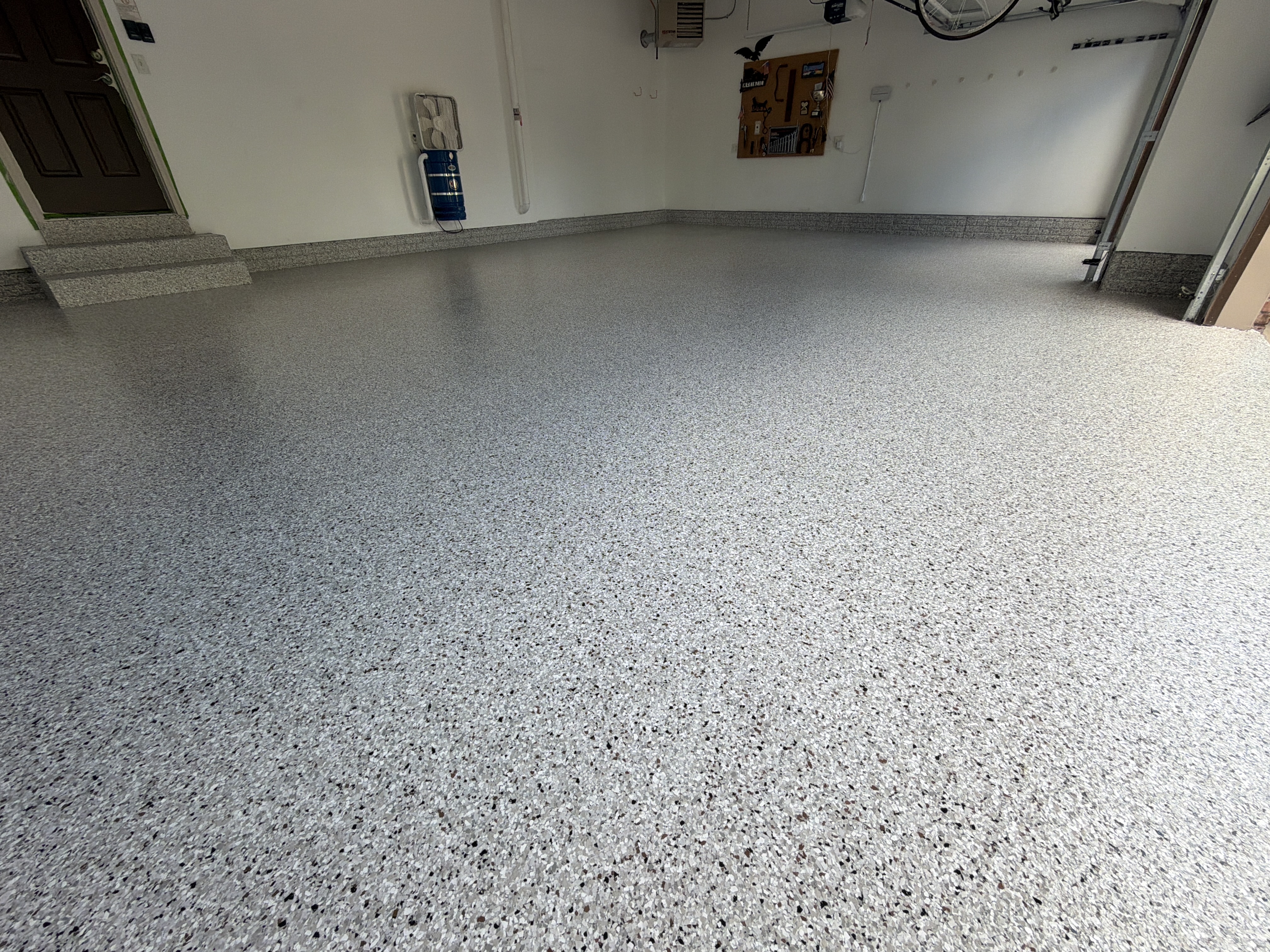
Polyaspartic is a newer coating technology (a type of polyurea) that was specifically engineered to solve the problems with epoxy. It's what most professional-grade installers have switched to.
Polyaspartic pros:
- Fast cure — Walk on it in 4-6 hours, park on it in 24 hours
- UV stable — Won't yellow. Ever. Even in direct sunlight.
- Temperature flexible — Can be applied in cold weather, stays flexible in winter
- Superior abrasion resistance — Handles hot tire pickup better than epoxy
- Longer lifespan — 15-20+ years vs. 5-10 for epoxy
Polyaspartic cons:
- Higher material cost (roughly 20-30% more than epoxy)
- Shorter working time — requires experienced installers (not DIY-friendly)
- Fast cure means mistakes are harder to fix during application
Head-to-Head Comparison
| Feature | Epoxy | Polyaspartic |
|---------|-------|-------------|
| Cure time (foot traffic) | 24-72 hours | 4-6 hours |
| Cure time (vehicles) | 3-7 days | 24 hours |
| UV stability | Poor — yellows | Excellent — stays clear |
| Hot tire pickup | Can occur | Very rare |
| Temperature range | 50°F+ only | All seasons |
| Flexibility | Rigid | Semi-flexible |
| Abrasion resistance | Good | Excellent |
| Chemical resistance | Good | Excellent |
| Expected lifespan | 5-10 years | 15-20+ years |
| Relative cost | $$ | $$$ |
| DIY-friendly? | Somewhat | No |
So Which Should You Choose?
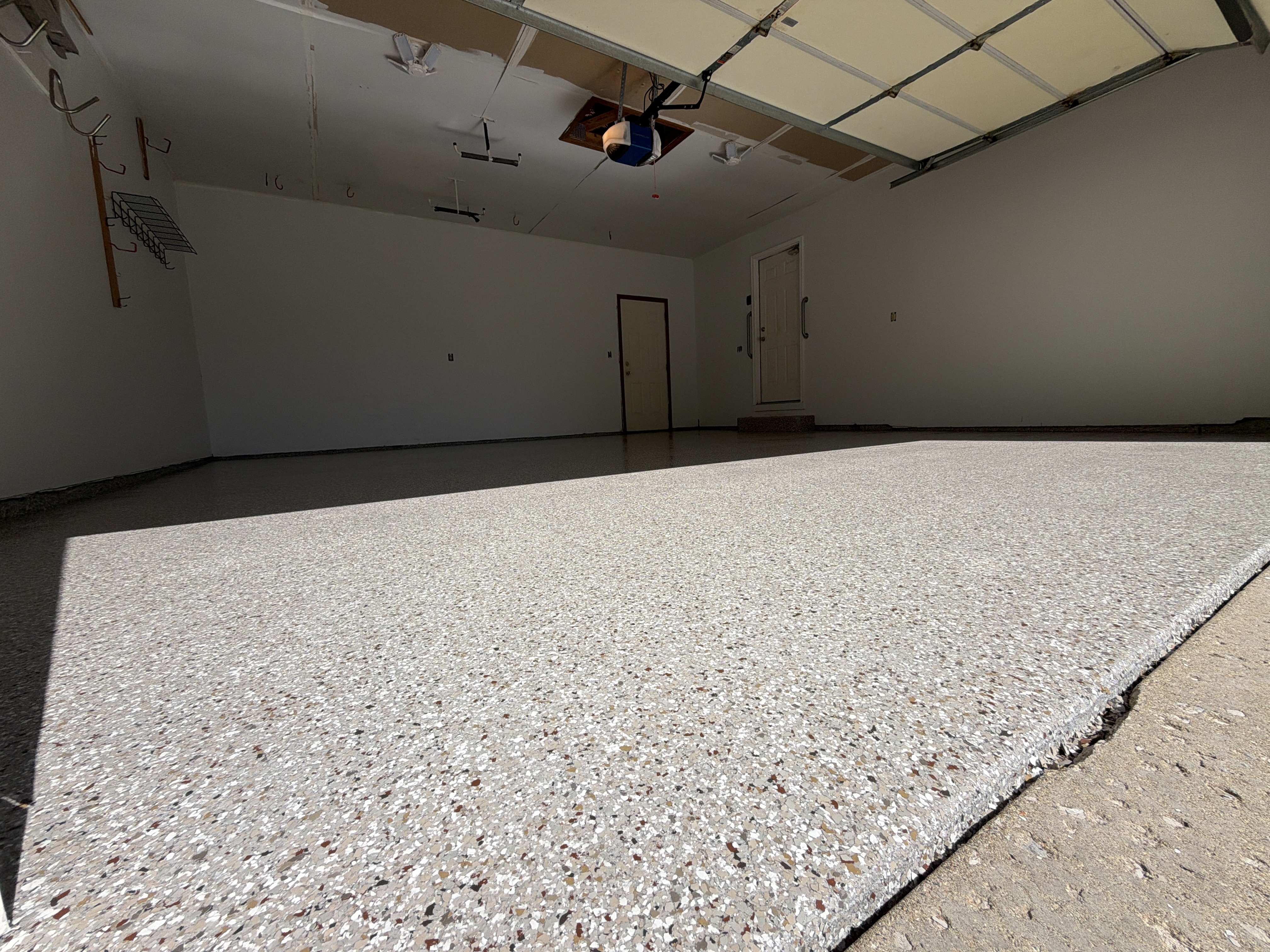
Our honest recommendation: polyaspartic for 90% of garage floors.
Here's why: The slightly higher upfront cost pays for itself because:
- You're back on your floor in 24 hours instead of a week
- The coating won't yellow near your garage door
- Illinois temperature swings won't crack it
- It lasts 2-3x longer than epoxy
The only time we recommend epoxy:
- Very tight budgets where the cost difference matters
- Interior floors with zero UV exposure
- Commercial settings where the specific chemical resistance profile of epoxy is preferred
What About "Hybrid" Systems?
Some installers use a hybrid approach — epoxy base coat for adhesion and build, with a polyaspartic clear topcoat for UV protection and fast cure. This can be a great middle ground that gives you:
- Strong epoxy adhesion on the bottom
- UV-stable polyaspartic protection on top
- Faster return-to-service than full epoxy
At Loud Bros, we tailor the system to your specific floor and needs. We're not locked into one product — we use what works best for YOUR situation.
See Polyaspartic Floors in Person
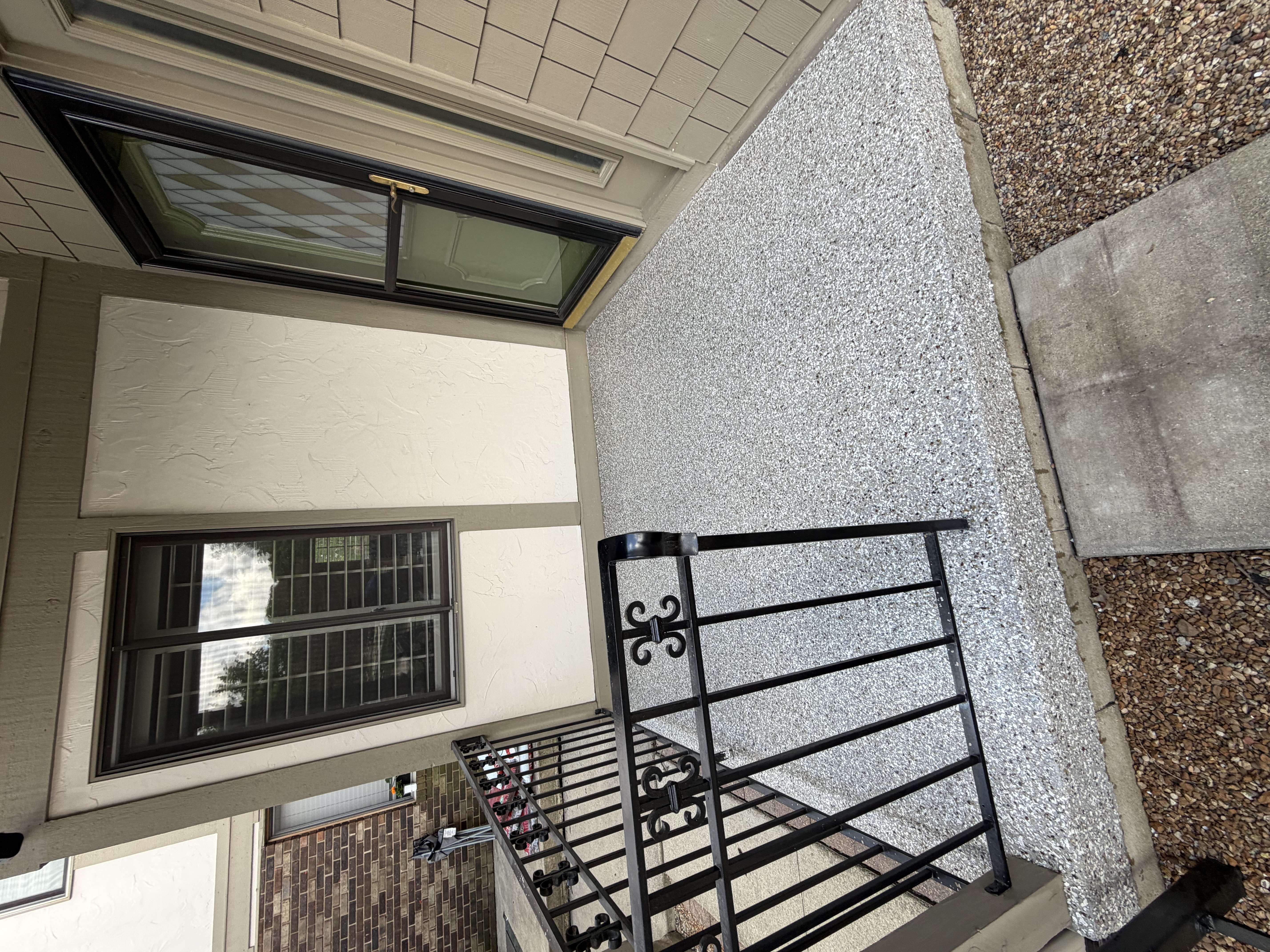
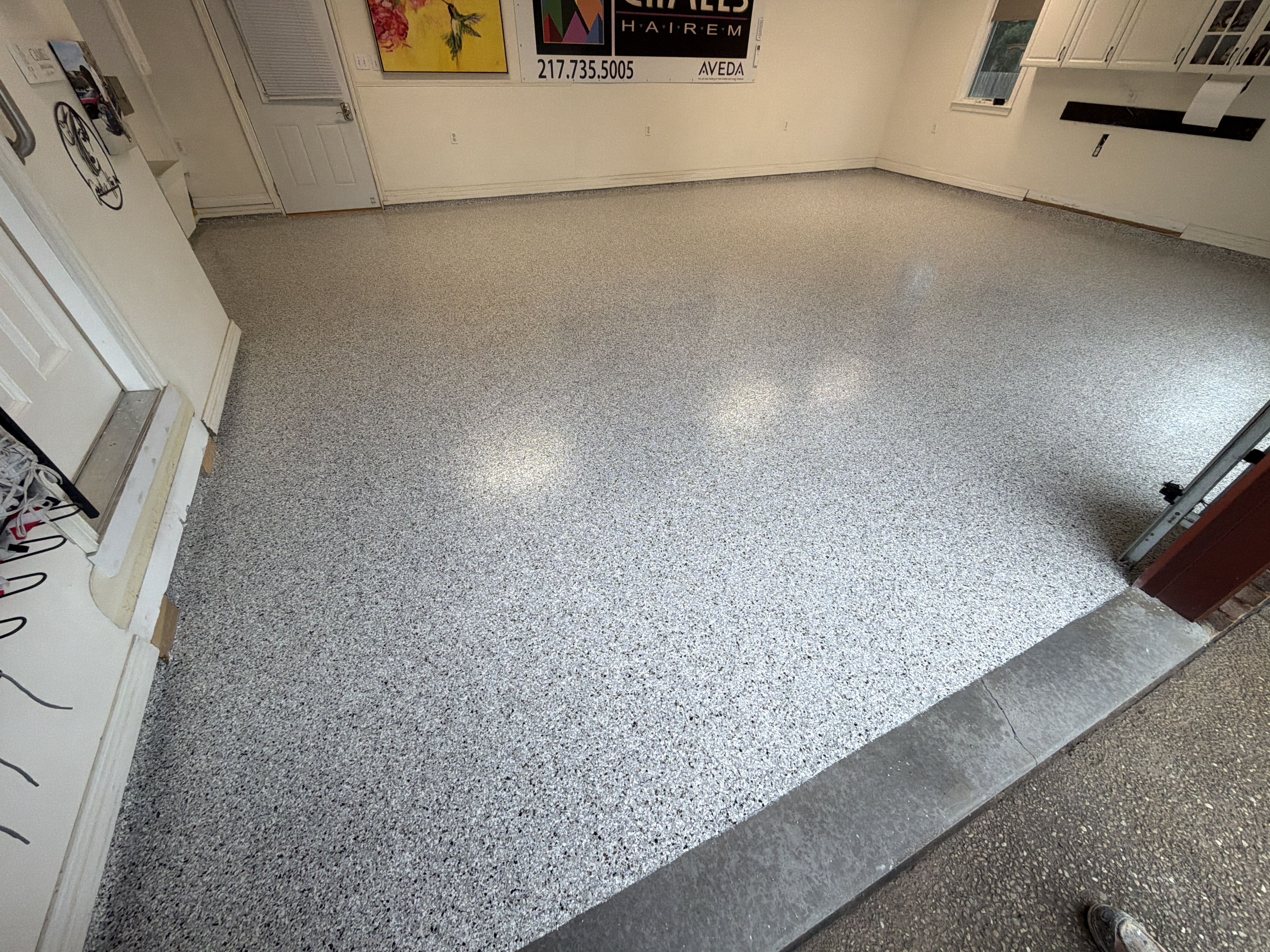
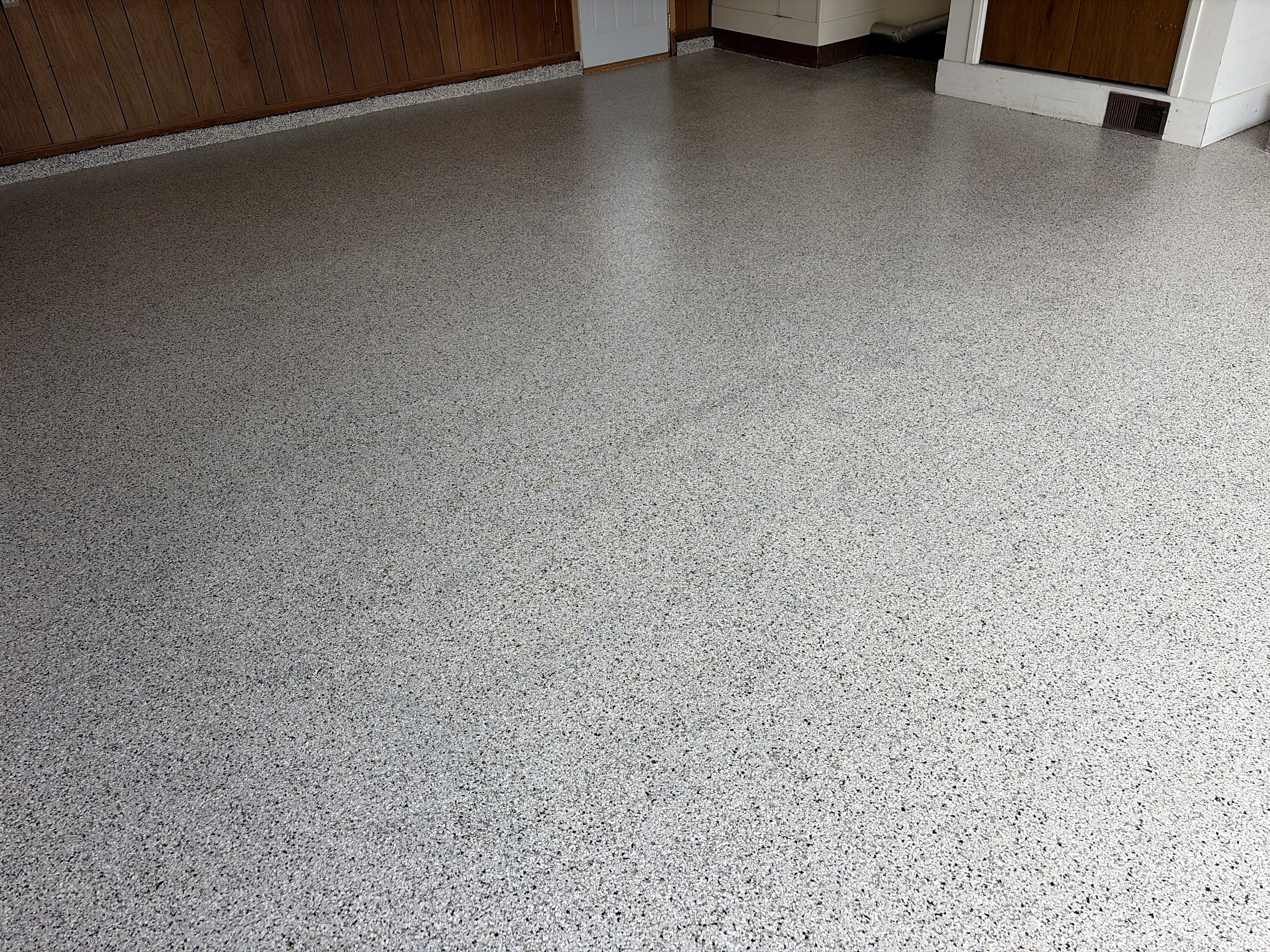
Check out our portfolio to see real polyaspartic and epoxy floors we've installed across Central Illinois. Or contact us for a free consultation — we'll help you pick the right system for your garage.
Loud Bros
Bloomington, Illinois
Ready to Transform Your Space?
Get a free quote for your project today.